What Is Digital Marketing and How Does It Work?
Digital marketing has become one of the most important ways businesses connect with customers in the modern world. As more people use smartphones, search engines, social media platforms, websites, and email every day, businesses have new opportunities to reach potential customers online.
Unlike traditional marketing methods such as newspapers, television, radio, and printed advertisements, digital marketing uses internet-based channels to promote products, services, brands, and businesses. It allows companies to communicate with specific audiences, measure results, and improve their marketing strategies based on real data.
But what exactly is digital marketing, and how does it work?
What Is Digital Marketing?
Digital marketing refers to the promotion of products, services, brands, or businesses through digital channels and technologies. These channels can include search engines, websites, social media, email, online advertising, mobile applications, and other internet-based platforms.
The main purpose of digital marketing is to connect a business with potential customers where they already spend their time: online.
For example, a person searching Google for “best running shoes” may see websites, advertisements, product pages, or articles related to running shoes. A business selling sports products can use digital marketing to appear in front of that person at the right moment.
Digital marketing is not limited to selling products. It can also help businesses build brand awareness, generate leads, increase website traffic, develop customer relationships, and establish credibility.
How Does Digital Marketing Work?
Digital marketing generally works through a combination of different strategies. A business first identifies its target audience and determines what those people need, what problems they have, and where they spend time online.
The business then creates content, advertisements, offers, or other marketing messages designed to attract that audience.
For example, imagine a company that sells online fitness programs. Its target audience might include people interested in exercise, healthy lifestyles, and weight management.
The company could publish useful fitness articles, create social media videos, optimize its website for search engines, send educational emails, and run paid advertisements.
When someone interacts with this content, they may visit the company’s website. From there, the business can encourage the visitor to subscribe to an email list, request information, purchase a product, or contact the company.
This process is often called the digital customer journey.
Major Types of Digital Marketing
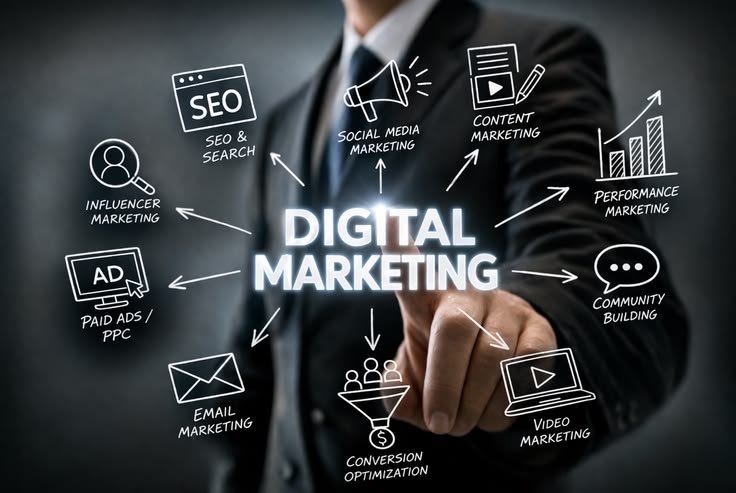
Digital marketing includes several different channels. Each one serves a specific purpose, but businesses often combine multiple channels to create a complete marketing strategy.
Search Engine Optimization
Search Engine Optimization, commonly known as SEO, is the process of improving a website so that it can appear more prominently in search engine results.
SEO can involve keyword research, helpful content, technical improvements, internal linking, website performance, and other optimization techniques.
For example, a website selling gardening products might publish an article titled “How to Grow Tomatoes at Home.” If the content is useful and properly optimized, it may attract people searching for information about growing tomatoes.
SEO can provide long-term organic traffic without requiring a business to pay for every individual visitor.
Content Marketing
Content marketing focuses on creating useful and relevant information for a target audience.
Content can include blog articles, guides, videos, infographics, podcasts, tutorials, newsletters, and social media posts.
The goal is not always to make an immediate sale. Instead, content can educate people, answer their questions, build trust, and introduce them to a business.
A company that consistently provides valuable content can become a trusted source of information within its industry.
Social Media Marketing
Social media marketing uses platforms such as Facebook, Instagram, LinkedIn, TikTok, and other social networks to connect with audiences.
Businesses can use social media to share educational content, product information, company updates, customer stories, videos, and promotional offers.
Social media also provides an opportunity for direct communication. Customers can comment on posts, send messages, ask questions, and provide feedback.
Email Marketing
Email marketing involves communicating with customers and potential customers through email.
Businesses can use email campaigns to share newsletters, product updates, educational information, special offers, and personalized recommendations.
One advantage of email marketing is that businesses can develop a direct communication channel with people who have chosen to receive their messages.
Effective email marketing usually focuses on providing value rather than sending constant promotional messages.
Paid Online Advertising
Paid advertising allows businesses to pay for visibility on digital platforms.
Examples include search engine advertising, social media advertising, display advertising, and sponsored content.
Paid advertising can provide faster exposure than organic methods. Businesses can often target audiences based on factors such as location, interests, search behavior, demographics, or other available targeting options.
However, successful paid advertising requires careful planning, testing, and monitoring.
Understanding the Digital Marketing Funnel
Another important part of digital marketing is understanding the customer funnel.
The first stage is awareness. At this stage, people may not know about a business or its products. Advertising, social media content, SEO, and educational articles can help introduce the brand.
The second stage is interest. The person becomes curious and wants to learn more.
The third stage is consideration. The potential customer compares options, reads reviews, studies product information, or evaluates pricing.
The fourth stage is conversion. The person takes the desired action, such as purchasing a product, submitting a form, booking a service, or subscribing to an offer.
The final stage is retention. After the conversion, businesses can continue communicating with customers through email, social media, loyalty programs, useful content, and customer support.
A strong digital marketing strategy considers every stage rather than focusing only on the final sale.
Why Digital Marketing Is Important
One of the biggest advantages of digital marketing is its ability to reach specific audiences.
Traditional advertising can sometimes reach large numbers of people without knowing exactly who is interested in the offer. Digital marketing provides more opportunities for audience targeting and performance measurement.
Businesses can track metrics such as website visits, clicks, impressions, leads, conversions, engagement, and revenue.
This information can help marketers understand which strategies are producing results.
Digital marketing can also be suitable for businesses of different sizes. A small company can start with organic content and gradually introduce paid advertising as its budget grows.
The Importance of Data and Analytics
Data plays a major role in modern digital marketing.
Instead of simply launching a campaign and hoping it works, marketers can monitor performance and make adjustments.
For example, if an advertisement receives many impressions but very few clicks, the headline, image, targeting, or offer may need improvement.
If a website receives many visitors but very few conversions, the landing page or customer journey may need attention.
Analytics can therefore turn marketing into a continuous process of testing and improvement.
Building Trust Through Digital Marketing
Successful digital marketing is not only about getting attention. It is also about building trust.
People are more likely to buy from businesses they understand and trust. Helpful content, transparent information, professional websites, genuine customer reviews, responsive communication, and consistent branding can all contribute to credibility.
Businesses should avoid misleading claims and focus on delivering real value.
A long-term digital marketing strategy should aim to create relationships rather than simply generate one-time transactions.
Final Thoughts
Digital marketing is a broad field that combines SEO, content marketing, social media, email, online advertising, websites, analytics, and other digital channels.
The basic process is simple: understand the audience, create something valuable, reach the right people, encourage meaningful action, measure the results, and improve the strategy over time.
There is no single digital marketing method that works perfectly for every business. Different industries, audiences, budgets, and goals require different approaches.
Businesses that focus on useful content, strong customer experiences, accurate data, and consistent communication can build a sustainable online presence.
As internet usage continues to grow, digital marketing will remain an important part of how businesses attract customers, build relationships, and compete in an increasingly connected marketplace.