AI in Business: Benefits and Challenges
Artificial Intelligence is rapidly changing the business world. Companies of all sizes are using AI to automate tasks, analyze data, communicate with customers, improve productivity, and make better-informed decisions. What was once considered an advanced technology for large corporations is becoming increasingly accessible to small businesses, startups, and individual professionals.
In 2026, AI is becoming a major part of business strategy. Companies are exploring generative AI, intelligent automation, predictive analytics, AI-powered customer service, and other technologies to improve their operations.
However, adopting AI is not without challenges. Businesses must consider costs, privacy, cybersecurity, accuracy, employee training, and responsible use. Understanding both the benefits and risks is essential for organizations that want to use artificial intelligence successfully.
What Is AI in Business?
AI in business refers to the use of artificial intelligence technologies to perform tasks that traditionally require human intelligence.
These tasks can include analyzing information, recognizing patterns, understanding language, generating content, making predictions, and supporting decisions.
Businesses can use AI in many departments, including marketing, sales, customer service, finance, human resources, software development, logistics, and operations.
The purpose is usually not simply to introduce new technology. Instead, businesses use AI to solve specific problems, reduce costs, save time, improve customer experiences, or create new opportunities.
1. Increased Productivity
One of the biggest benefits of AI for businesses is increased productivity.
Employees often spend considerable time on repetitive tasks such as organizing documents, responding to routine questions, entering information, preparing summaries, and processing data.
AI can automate or accelerate many of these activities.
For example, an AI system may summarize a long business report in a short period of time. A customer-service chatbot can answer common questions without requiring an employee to respond manually to every request.
When routine work is reduced, employees can focus on more valuable activities such as problem-solving, creativity, strategy, and customer relationships.
2. Lower Operating Costs
AI can help businesses reduce certain operating costs by automating repetitive processes.
For example, automated customer-service systems can handle large numbers of basic requests. Automated data-processing systems can reduce manual administrative work.
AI can also help companies identify inefficiencies.
By analyzing business data, an AI system may identify areas where resources are being wasted or where processes could be improved.
However, businesses should remember that AI implementation itself can involve costs, including software, computing resources, integration, training, and maintenance.
3. Better Customer Service
Customer expectations are changing. People increasingly want fast and convenient answers.
AI-powered customer-service tools can provide assistance around the clock. Chatbots can answer frequently asked questions, provide basic product information, and guide customers through common processes.
AI can also analyze customer conversations to identify common problems.
Human employees can then focus on complex issues that require empathy, negotiation, or specialized knowledge.
The most effective approach is often to combine AI automation with human support.
4. Improved Decision-Making
Businesses generate enormous amounts of data.
Sales transactions, customer feedback, website activity, inventory information, financial records, and marketing results can all provide valuable insights.
AI can process large datasets and identify patterns that may be difficult to discover manually.
For example, a retailer can analyze purchasing behavior to identify products that are becoming more popular.
A marketing team can analyze campaign data to understand which strategies are producing better results.
AI does not automatically make the correct decision, but it can provide useful information that supports human decision-making.
5. Personalized Marketing
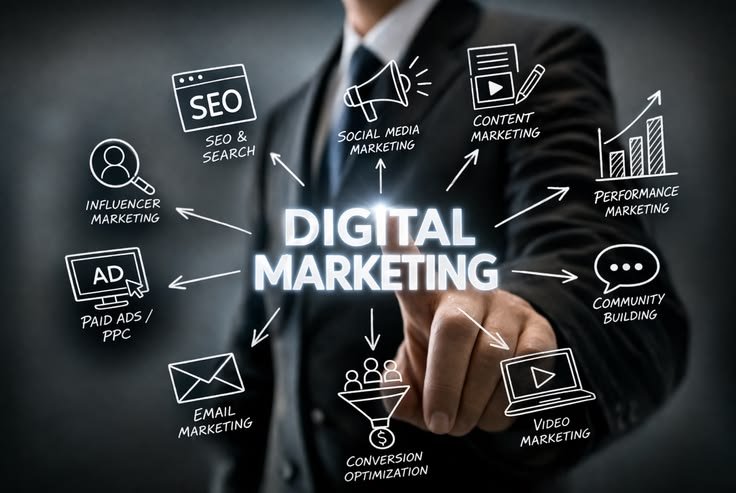
AI is transforming digital marketing.
Businesses can use AI to analyze customer behavior and create more personalized experiences.
For example, an online store may recommend products based on a customer’s previous browsing or purchasing behavior.
Marketing teams can also use AI to analyze audiences, generate content ideas, test different approaches, and identify trends.
Personalization can improve customer engagement because people are more likely to respond to information that is relevant to their interests.
However, businesses must balance personalization with privacy. Customers may become uncomfortable if companies collect or use personal information without sufficient transparency.
6. AI in Sales
Sales teams can also benefit from artificial intelligence.
AI systems can analyze customer information, identify potential leads, organize sales data, and assist with communication.
For example, an AI system may help a sales representative prioritize leads based on patterns in previous customer behavior.
AI can also help prepare meeting summaries and suggest follow-up actions.
This allows sales professionals to spend more time building relationships rather than performing administrative tasks.
7. AI in Human Resources
Human resources departments handle many administrative responsibilities.
AI can assist with scheduling, document processing, employee questions, and other routine activities.
Some organizations also use AI to analyze job applications or identify candidates who match specific requirements.
However, this area requires significant caution.
AI systems can reproduce biases present in their training data or design. If an automated hiring system is not carefully evaluated, it could unfairly disadvantage certain candidates.
Human oversight is therefore essential when AI is used for employment-related decisions.
8. AI in Finance
Financial departments can use AI to analyze transactions, identify unusual activity, automate reporting, and support forecasting.
AI can process large amounts of financial information quickly.
Banks and financial companies also use AI-based systems to detect potentially fraudulent transactions.
However, financial decisions can have serious consequences, so organizations must carefully evaluate AI systems and ensure appropriate controls are in place.
9. AI and Cybersecurity
As businesses become more digital, cybersecurity becomes increasingly important.
AI can help identify unusual network activity, detect suspicious behavior, and analyze large amounts of security data.
Because cyberattacks can happen quickly, automated systems can provide an important advantage by identifying potential threats faster than humans could manually examine every event.
At the same time, cybercriminals can also use AI to create more sophisticated attacks.
This means businesses must continuously improve their security systems and employee awareness.
10. AI Can Encourage Innovation
AI is not only useful for reducing costs. It can also help businesses develop new products and services.
Companies can use AI to analyze customer needs, identify market opportunities, test ideas, and create prototypes.
Generative AI can help teams explore different concepts quickly.
For startups and smaller companies, accessible AI tools can reduce the resources required for certain tasks and make it easier to experiment with new ideas.
Challenges of Using AI in Business
Although AI offers many benefits, businesses should not adopt it without careful planning.
Data Privacy
AI systems often require access to large amounts of information.
Businesses must protect customer and employee data and ensure that information is handled appropriately.
Privacy failures can damage a company’s reputation and may also result in legal or financial consequences.
Accuracy
AI systems can make mistakes.
A generated report may contain incorrect information. A chatbot may provide an inaccurate answer. An analytical system may produce an unreliable prediction.
Businesses should therefore establish review processes, especially for important decisions.
Cybersecurity
AI systems themselves can become targets for attackers.
Businesses must protect AI tools, databases, user accounts, and connected systems.
Security should be considered during implementation rather than added later.
Employee Training
Introducing AI does not automatically make employees productive.
Workers need to understand how to use AI tools effectively and responsibly.
Training should cover both practical skills and potential risks.
Employees should know when AI can be trusted, when information needs verification, and what data should not be entered into an AI system.
Cost of Implementation
AI can reduce costs over time, but implementation may require significant investment.
Businesses may need new software, hardware, cloud resources, consultants, developers, security systems, and training.
Before adopting an AI solution, companies should consider whether the expected benefits justify the investment.
AI and the Future of Jobs
One of the biggest questions surrounding AI is its impact on employment.
Some tasks will likely become increasingly automated. Jobs involving repetitive and predictable activities may be particularly affected.
However, AI can also create new roles and change existing jobs.
Employees may increasingly need skills related to AI tools, data analysis, technology management, creativity, communication, and critical thinking.
The future is likely to involve greater collaboration between people and intelligent software.
Responsible AI in Business
Businesses should develop clear rules for responsible AI use.
They should identify what AI is being used for, what data it can access, who is responsible for reviewing its outputs, and how errors will be handled.
Transparency is also important. Customers and employees may need to know when they are interacting with an AI system.
Responsible AI is not only about avoiding problems. It can also build trust and help organizations use technology more effectively.
Conclusion
Artificial intelligence offers businesses significant opportunities. It can improve productivity, reduce repetitive work, enhance customer service, support decision-making, strengthen certain security processes, and encourage innovation.
However, AI also presents important challenges. Businesses must consider privacy, cybersecurity, accuracy, cost, employee training, bias, and responsible use.
The most successful companies will probably not be those that simply use the most AI. Instead, they will be the organizations that understand where AI provides genuine value and combine it with human expertise.
AI should be viewed as a powerful business tool rather than a complete replacement for people. When used carefully, it can help businesses become more efficient, innovative, and competitive while allowing employees to focus on work that requires human judgment and creativity.