How the Internet Has Changed Modern Life
The internet has become one of the most important technologies in modern society. What began as a way to connect computers and share information has developed into a global system that influences almost every part of daily life.
Today, people use the internet to communicate with family and friends, study, work, shop, manage finances, access entertainment, find information, and run businesses. Smartphones and affordable internet access have made online services available to billions of people around the world.
The internet has brought enormous convenience, but it has also created new challenges related to privacy, cybersecurity, misinformation, and digital dependence. Understanding how the internet has changed modern life helps us use technology more effectively and responsibly.
What Is the Internet?
The internet is a global network of interconnected computers and devices that communicate with one another.
Through the internet, people can access websites, applications, online services, digital communication platforms, cloud systems, and countless other resources.
The World Wide Web is one of the most familiar parts of the internet. It allows users to access websites through browsers.
Other internet-based technologies include email, online messaging, video calls, cloud computing, streaming services, online banking, and many business applications.
1. Communication Has Become Faster
One of the biggest changes brought by the internet is the speed of communication.
In the past, communicating with someone in another country could involve letters, expensive telephone calls, or other slower methods.
Today, people can send messages almost instantly.
Email, messaging applications, video calls, and social platforms allow individuals to communicate across long distances.
Families can stay connected even when members live in different countries. Businesses can communicate with customers and employees around the world.
This has made geographical distance much less of a barrier to communication.
2. Social Relationships Have Changed
The internet has changed how people build and maintain relationships.
Social-media platforms allow people to share photos, opinions, updates, and experiences with friends and wider communities.
People can also find online communities based on shared interests.
For example, someone interested in photography, programming, gaming, cooking, or a particular sport can find communities where people discuss those subjects.
However, online relationships should not completely replace meaningful offline relationships.
Excessive social-media use can also create problems such as distraction, comparison, and reduced face-to-face interaction.
3. Education Has Become More Accessible
The internet has transformed education.
Students can access educational videos, online courses, digital libraries, tutorials, research resources, and interactive learning platforms.
A person living far from a major educational institution can now access information from universities, teachers, experts, and organizations around the world.
Online education has also created opportunities for people who cannot attend traditional classes because of work, location, finances, or other responsibilities.
However, students must learn how to evaluate online information because not everything published on the internet is accurate.
4. Remote Work Has Expanded
The internet has made remote work possible for many professions.
Employees can communicate through video meetings, messaging platforms, email, project-management systems, and cloud-based applications.
A worker may be able to collaborate with colleagues located in different cities or countries without being physically present in the same office.
This has created greater flexibility for some workers and businesses.
It has also enabled companies to recruit talent from wider geographic areas.
At the same time, remote work requires strong communication, time management, cybersecurity awareness, and reliable internet access.
5. Businesses Have Gone Digital
The internet has fundamentally changed how businesses operate.
Companies can create websites, sell products online, communicate with customers, advertise digitally, provide customer support, and manage operations through cloud-based systems.
Even small businesses can reach customers outside their local area.
A small company can potentially sell products internationally without opening physical stores in every market.
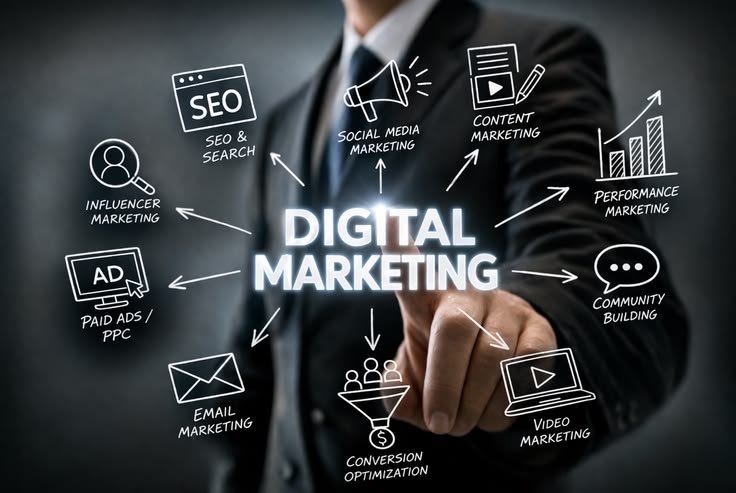
Digital marketing has also created new ways for businesses to reach specific audiences.
6. Online Shopping Has Changed Consumer Behavior
E-commerce has made shopping more convenient.
Customers can compare products, read reviews, check prices, and place orders without visiting physical stores.
Online shopping has expanded the range of products available to consumers.
People can purchase products from businesses located in other cities or countries, depending on shipping availability and local regulations.
However, consumers must also be careful about scams, counterfeit products, misleading advertisements, and unreliable sellers.
7. Digital Payments Have Become Common
The internet has changed how people manage and transfer money.
Online banking allows customers to check balances, transfer funds, pay bills, and manage accounts without visiting a physical branch.
Digital payment services can make transactions faster and more convenient.
Businesses can also accept online payments from customers in different locations.
However, financial activity online creates cybersecurity risks. Users should protect passwords, use appropriate security measures, and avoid sharing sensitive information with unknown people or websites.
8. Entertainment Has Become Digital
The internet has transformed entertainment.
People can stream movies, television programs, music, podcasts, live events, and videos.
Instead of waiting for a particular television program or purchasing physical media, users can often access entertainment whenever they want.
Online gaming has also become a major form of entertainment and social interaction.
Creators can publish videos, music, artwork, and other content directly to audiences without depending entirely on traditional media companies.
9. Information Is Available Instantly
The internet has made information much easier to access.
People can search for explanations, instructions, news, product information, educational resources, and other topics within seconds.
This has changed how people solve everyday problems.
For example, someone who needs to repair a household item may find a tutorial online. A student can research a historical topic. A traveler can learn about destinations before visiting them.
However, easy access to information also creates a major challenge: not all information is trustworthy.
10. The Problem of Misinformation
The internet allows accurate and inaccurate information to spread quickly.
False stories, misleading headlines, manipulated images, fabricated statistics, and deceptive claims can reach large audiences.
This makes digital literacy increasingly important.
Before believing or sharing information, users should consider the source, check whether multiple reliable sources support the claim, examine the date, and distinguish between fact and opinion.
People should be particularly careful with sensational claims that encourage immediate emotional reactions.
11. Healthcare Information Is More Accessible
The internet has made health-related information easier to access.
People can learn about general health topics, find medical resources, schedule appointments, communicate with healthcare providers, and access digital health services where available.
However, online information should not automatically be treated as a professional diagnosis.
Health information can be incomplete, outdated, or inappropriate for a specific individual.
Reliable sources and qualified professionals remain important.
12. Travel Has Become Easier
Planning travel has become much simpler.
People can research destinations, compare transportation options, view maps, book accommodation, read reviews, and plan activities online.
Digital maps and navigation services can provide directions and real-time information.
Travelers can also communicate with businesses and access translation tools.
The internet has therefore reduced many of the difficulties traditionally associated with planning trips.
13. Navigation Has Changed
Digital maps have transformed transportation.
People no longer need to rely entirely on printed maps or ask for directions.
Navigation applications can provide routes, estimated travel times, traffic information, and alternative paths.
This technology is useful for drivers, travelers, delivery workers, and businesses.
However, people should not become completely dependent on digital navigation. Devices can lose connectivity, provide inaccurate information, or experience technical problems.
14. New Career Opportunities Have Appeared
The internet has created entirely new types of work.
Examples include:
- Web development
- Digital marketing
- Content creation
- Online education
- Social-media management
- Remote customer support
- Software development
- E-commerce
- Online consulting
People can also work as freelancers and provide services to clients in different countries.
This has created opportunities for individuals who can develop valuable digital skills.
15. Cloud Computing Has Changed Work
Cloud technology allows users to store and access information and software through internet-connected systems.
Instead of keeping everything on one computer, businesses can use cloud services for documents, databases, communication, collaboration, and applications.
Employees can work on shared documents from different locations.
Cloud technology has therefore become an important foundation for modern digital businesses.
16. Smartphones Have Made the Internet Portable
The rise of smartphones has made internet access much more personal and portable.
People can browse websites, communicate, shop, navigate, take photos, watch videos, and manage finances from a device that fits in their pocket.
This has changed people’s expectations.
Many users now expect services to be available immediately and optimized for mobile devices.
17. Privacy Has Become More Important
The convenience of online services often comes with data collection.
Websites and applications may collect information about users for legitimate purposes such as providing services, personalization, analytics, or security.
However, users should understand what information they are sharing and with whom.
Strong passwords, appropriate privacy settings, careful app permissions, and awareness of phishing attempts can help reduce risks.
18. The Internet Has Changed Business Competition
Businesses are no longer competing only with nearby companies.
A customer can compare products and services from businesses located across an entire country or even internationally.
This creates more competition but also more opportunities.
Businesses that provide strong customer service, useful information, reliable products, and convenient digital experiences can reach customers beyond their local markets.
19. Digital Communities Have Become Powerful
Online communities allow people with common interests to communicate regardless of location.
These communities can provide support, education, entertainment, professional networking, and collaboration.
Developers can work on open-source projects. Researchers can exchange ideas. Entrepreneurs can meet potential partners.
The internet has therefore become not just a source of information but also a platform for collective activity.
20. Everyday Life Is Becoming More Connected
Many ordinary activities now involve internet-connected technology.
People can order food, book appointments, pay bills, communicate with schools, manage subscriptions, control smart devices, and access entertainment online.
The growth of connected devices is likely to increase this trend.
As more services become digital, internet access and digital skills are becoming increasingly important for participation in modern society.
Challenges of Internet Use
Despite its benefits, the internet also creates challenges.
Excessive screen time can affect productivity and personal routines.
Cybersecurity threats can expose accounts and personal information.
Online scams can cause financial losses.
Misinformation can influence people’s decisions.
Privacy concerns can arise when large amounts of personal data are collected.
For these reasons, internet users need both technical knowledge and good digital habits.
How to Use the Internet Responsibly
Responsible internet use begins with basic security and awareness.
Use strong and unique passwords where possible. Enable additional account security features when available.
Think carefully before clicking unknown links or downloading unexpected files.
Verify important information before sharing it.
Avoid giving sensitive information to untrusted websites or individuals.
It is also useful to take regular breaks from screens and maintain a healthy balance between online and offline activities.
The Future of the Internet
The internet will likely become even more integrated into everyday life.
Artificial intelligence, connected devices, cloud computing, digital payments, virtual environments, and automation are expected to create new online services.
The boundary between physical and digital experiences may become less noticeable.
At the same time, privacy, cybersecurity, digital inequality, and responsible technology use will become increasingly important.
The future internet will need to be not only faster and more capable but also secure, accessible, and trustworthy.
Conclusion
The internet has changed modern life in ways that would have been difficult to imagine only a few decades ago.
It has transformed communication, education, employment, shopping, entertainment, banking, travel, business, and access to information.
These changes have created enormous opportunities. People can learn from experts around the world, businesses can reach international customers, and individuals can communicate instantly across long distances.
However, the internet also requires responsibility. Users must learn how to protect their privacy, recognize scams, evaluate information, and maintain a healthy balance between digital and offline life.
The internet is now an essential part of modern society. The most important skill is not simply knowing how to use it, but knowing how to use it safely, intelligently, and responsibly.