
How Social Media Can Support Business Growth
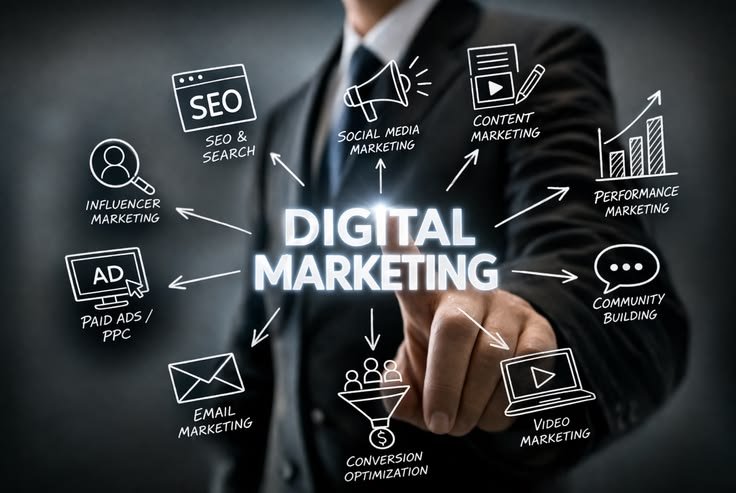
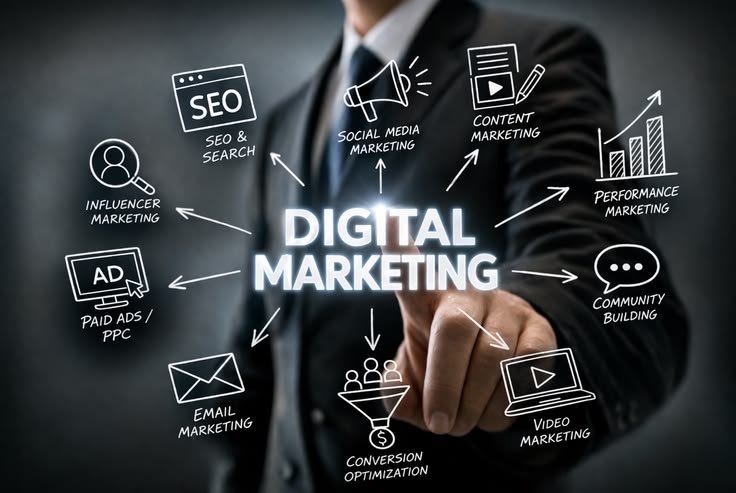
Social media has become an important part of modern business marketing. Platforms that were originally designed for personal communication are now powerful tools for businesses to build awareness, communicate with customers, promote products, share content, and develop long-term relationships.
However, successful social-media marketing is not simply about posting advertisements every day. Businesses need to understand their audience, choose appropriate platforms, create useful content, communicate consistently, and measure their results.
For small businesses especially, social media can provide an affordable way to reach potential customers and compete for attention in an increasingly digital marketplace.
What Is Social Media Marketing?
Social media marketing involves using social platforms to communicate with an audience and support business objectives.
Businesses can use social media to:
- Increase brand awareness
- Attract website visitors
- Generate leads
- Promote products and services
- Provide customer support
- Build communities
- Share educational content
- Collect customer feedback
- Strengthen relationships
Different platforms have different audiences and features, so businesses should choose channels based on their goals and target customers.
1. Build Brand Awareness
One of the biggest benefits of social media is increased visibility.
A business can introduce its brand to people who may not have discovered it through traditional advertising or search engines.
Regularly sharing useful and recognizable content can help customers become familiar with a company.
For example, a local bakery might share photos of products, behind-the-scenes videos, customer stories, special announcements, and baking tips.
Over time, repeated exposure can help the business remain in customers’ minds.
2. Understand Your Target Audience
Social media works best when businesses understand who they are trying to reach.
Consider questions such as:
- Who are your customers?
- What problems do they have?
- What type of content do they enjoy?
- Which platforms do they use?
- What questions do they frequently ask?
- What motivates them to purchase?
The answers can influence the type of content a business creates.
A company targeting professionals may use different platforms and communication styles than a business targeting teenagers or hobby communities.
3. Choose the Right Platforms
Businesses do not need to maintain an active presence on every social-media platform.
Trying to manage too many channels can spread a small marketing team too thin.
Instead, choose platforms where the target audience is likely to be active.
For example, a visually focused business may benefit from image and video platforms, while a professional service provider may focus more on professional networking and educational content.
The best platform is not necessarily the one with the largest number of users. It is the one that provides access to the right audience.
4. Create Valuable Content
Social media users are exposed to enormous amounts of content every day.
Businesses therefore need to provide a reason for people to stop scrolling.
Useful content can include:
- Educational tips
- Tutorials
- Short videos
- Product demonstrations
- Industry insights
- Customer stories
- Frequently asked questions
- Behind-the-scenes content
- Practical advice
- Entertaining posts
Content should not always ask people to buy something.
Providing value can help establish trust and encourage people to continue following the business.
5. Use Visual Content
Images and videos can communicate information quickly.
Businesses can use visual content to demonstrate products, explain processes, introduce team members, show projects, or tell customer stories.
Short-form video can be particularly useful for explaining simple ideas or showcasing products.
However, production quality does not always need to be extremely expensive.
Clear lighting, understandable audio, useful information, and authentic presentation can be more important than creating highly elaborate productions.
6. Tell Your Brand Story
Customers often want to know more than what a company sells.
They may be interested in how the business started, who operates it, what it believes in, and how products are created.
Storytelling can make a business feel more human.
For example, a small clothing company might share the story behind its designs or explain how it chooses materials.
Authentic stories can help distinguish a business from competitors selling similar products.
7. Engage With Customers
Social media is not only a broadcasting tool.
It is also a communication channel.
Businesses should respond to reasonable questions and comments when possible.
Customers may ask about prices, availability, product features, delivery, or other issues.
Responding professionally can demonstrate that the company values its customers.
Even negative feedback can provide useful information about problems that need to be addressed.
8. Use Social Media for Customer Support
Some customers prefer contacting businesses through social platforms rather than email or telephone.
Businesses can use social messaging to answer basic questions and direct customers to appropriate support channels.
However, sensitive personal information should not be requested publicly.
For complicated issues, businesses may need to move the conversation to a secure support channel.
Clear customer-service procedures can help prevent missed messages and inconsistent responses.
9. Drive Traffic to Your Website
Social media can be used to send visitors to a business website.
For example, a company can share an article and encourage interested users to read the full guide on its website.
Product announcements can direct customers to product pages.
Educational posts can lead visitors to longer tutorials.
A website gives the business greater control over detailed information, product pages, customer resources, and other important content.
10. Generate Leads
Social media can also support lead generation.
Businesses may encourage interested people to request information, sign up for newsletters, download useful resources, schedule consultations, or submit inquiries.
The process should be simple.
If a potential customer has to complete a long and confusing form just to request basic information, they may abandon the process.
A clear offer and straightforward call to action can improve the experience.
11. Promote Products Without Overdoing It
Businesses naturally want to promote their products, but constant advertising can reduce engagement.
A social-media account that posts nothing except “buy now” messages may become less interesting to followers.
A balanced strategy can include educational, entertaining, community-focused, and promotional content.
For example, a business might share useful tips most of the time while occasionally highlighting products that directly relate to those topics.
12. Use Customer Reviews and Testimonials
Customer experiences can be powerful forms of social proof.
When customers are satisfied, their reviews or testimonials can help potential buyers understand what to expect.
Businesses should obtain appropriate permission before publishing customer information, images, or testimonials.
Reviews should also be represented honestly.
Fabricated or misleading testimonials can damage trust and potentially create legal or platform-related problems.
13. Work With Creators and Influencers
Some businesses collaborate with online creators who have established audiences.
The right partnership can introduce a product to people who are already interested in a particular topic.
However, follower count alone should not determine whether a creator is a good match.
Businesses should consider:
- Audience relevance
- Engagement
- Content quality
- Reputation
- Brand compatibility
- Transparency
- Campaign objectives
A smaller creator with a highly relevant audience may sometimes be more valuable than a much larger but unrelated account.
14. Consider Paid Social Advertising
Organic social-media posts can help businesses build an audience, while paid advertising can provide additional reach.
Social platforms may offer targeting options that allow businesses to reach specific audiences based on factors permitted by the platform.
Paid campaigns can be used for awareness, website traffic, lead generation, product promotion, or other objectives.
However, businesses should set clear budgets and measure results carefully.
Spending money on advertisements does not automatically mean the campaign will be profitable.
15. Measure Performance
Social-media activity should be connected to business objectives.
Useful metrics can include:
- Reach
- Engagement
- Website visits
- Leads
- Sales
- Video views
- Follower growth
- Conversion rates
The most important metrics depend on the campaign.
If the goal is brand awareness, reach may be useful.
If the goal is sales, conversions and revenue may matter more than likes.
Businesses should avoid judging success based only on follower counts.
16. Learn From Analytics
Social-media analytics can show which types of content perform best.
For example, a business may discover that short educational videos receive more engagement than promotional images.
Instead of guessing what the audience wants, marketers can use performance data to improve their content strategy.
However, one successful post does not necessarily prove that the same format will always work.
Look for patterns over time.
17. Be Consistent
Consistency is important for building an audience.
This does not mean posting constantly.
A realistic schedule that a business can maintain is usually better than publishing large amounts of content for a few weeks and then becoming inactive.
Create a basic content calendar to plan upcoming posts.
A calendar can include educational topics, product announcements, seasonal content, customer stories, and other relevant ideas.
18. Respond to Negative Feedback Professionally
Every business may eventually receive criticism.
Deleting reasonable criticism or responding emotionally can make a situation worse.
Instead, acknowledge legitimate concerns, provide useful information, and move complicated discussions to private support channels when appropriate.
If criticism identifies a real problem, the business should focus on fixing the problem rather than simply defending itself online.
Professional communication can protect a company’s reputation.
19. Avoid Common Social-Media Mistakes
Several mistakes can reduce the effectiveness of social-media marketing.
Common examples include:
- Posting without a clear purpose
- Using every platform without a strategy
- Posting only advertisements
- Ignoring customer comments
- Buying fake followers
- Copying competitors
- Publishing misleading information
- Focusing only on follower numbers
- Posting inconsistently
- Ignoring analytics
A good social-media strategy should be based on genuine audience needs rather than vanity metrics.
20. Build a Long-Term Community
The strongest social-media strategies often focus on building communities rather than simply collecting followers.
A community consists of people who are interested in a shared topic, product, problem, or set of values.
Businesses can encourage community by asking useful questions, responding to discussions, highlighting customers, sharing educational resources, and creating opportunities for meaningful interaction.
A loyal community can become a valuable long-term business asset.
Social Media and Small Businesses
Social media can be particularly useful for small businesses because it provides opportunities to communicate directly with potential customers.
A small business does not necessarily need a large marketing department.
A simple strategy can begin with one or two platforms, consistent content, customer interaction, and basic performance tracking.
Over time, successful approaches can be expanded.
The Importance of Authenticity
People can often recognize content that feels overly promotional or artificial.
Businesses should aim for a genuine voice.
This does not mean sharing private information or behaving unprofessionally. It means communicating clearly and honestly rather than trying to imitate every popular trend.
Authenticity can help a brand develop stronger relationships with its audience.
Conclusion
Social media can be a powerful tool for business growth when it is used strategically.
Businesses can use social platforms to build awareness, share valuable content, communicate with customers, generate leads, promote products, collect feedback, and develop communities.
The key is to focus on the right audience rather than simply trying to reach the largest possible number of people.
Choose appropriate platforms, create useful content, engage with customers, measure meaningful results, and remain consistent.
Social media should not be treated as a shortcut to instant success. Like other forms of digital marketing, it requires experimentation, patience, and continuous improvement.
When businesses use social media to provide genuine value and build trust—not simply to sell—they can create stronger customer relationships and establish a sustainable foundation for long-term growth.