How to Build an Effective Email List
Building an effective email list is one of the most valuable strategies in digital marketing. An email list gives a business a direct communication channel with people who have voluntarily shown interest in its products, services, content, or expertise.
Unlike social media followers, who may not see every post because of changing platform algorithms, email subscribers can receive messages directly in their inbox. This makes email a useful tool for nurturing relationships, sharing valuable information, promoting products, and encouraging repeat engagement.
However, successful list building is not about collecting the largest possible number of email addresses. A high-quality list should contain people who are genuinely interested in what the business has to offer.
What Is an Email List?
An email list is a collection of email addresses from people who have chosen to receive communication from a business or organization.
Subscribers may join an email list for many reasons. They might want access to a free guide, receive discounts, learn about a particular subject, get product updates, or receive a regular newsletter.
A business can use its email list to send different types of communication, including:
- Newsletters
- Educational content
- Product updates
- Special offers
- Event invitations
- Helpful resources
- Customer information
- Personalized recommendations
The goal should always be to provide appropriate value while respecting subscriber preferences and applicable marketing and privacy requirements.
Why Building an Email List Matters
Email list building is important because it creates an audience that a business can communicate with over time.
Social media platforms are useful for discovering new audiences, but businesses have limited control over how and when their content is displayed. An email list provides a more direct communication channel.
A subscriber who joins a list has already taken an action that indicates interest. This can make email communication particularly valuable for nurturing potential customers.
For example, someone might discover a digital marketing website through a search engine and read an article about SEO. The article can offer readers a useful SEO checklist in exchange for an email subscription. That visitor can then receive additional educational content through email.
Over time, the relationship can develop from visitor to subscriber and potentially to customer.
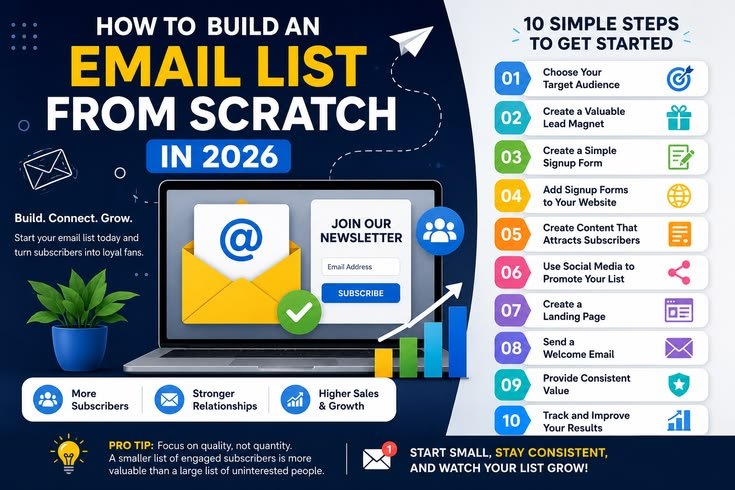
Start by Defining Your Target Audience
Before trying to grow an email list, determine exactly who you want to attract.
A business should understand the type of person most likely to benefit from its content or products.
Consider questions such as:
- Who are my ideal subscribers?
- What problems do they need to solve?
- What topics interest them?
- What information are they searching for?
- What products or services might they need?
- What would make them want to subscribe?
For example, a website focused on digital marketing might target small-business owners, entrepreneurs, marketers, and people learning online business skills.
Understanding the audience helps the business create better signup offers and more relevant email content.
Give People a Reason to Subscribe
One of the most important principles of email list building is providing a clear reason for people to subscribe.
Simply placing a box that says “Enter your email” may not be enough.
Visitors need to understand what they will receive in return.
A business can offer valuable resources such as:
Free Guides
A detailed guide can provide practical information about a specific topic.
Checklists
Checklists are useful because they make complicated tasks easier to follow.
Templates
Templates can save people time and provide a ready-to-use starting point.
Educational Newsletters
A regular newsletter can provide useful tips, industry information, and resources.
Webinars
Businesses can use educational webinars to attract people interested in a specific subject.
Special Offers
E-commerce businesses may offer a discount or special promotion to encourage subscriptions.
The incentive should be relevant to the audience and connected to the business.
Use Website Signup Forms
Your website is one of the best places to collect email subscribers.
Signup forms can be placed in several areas, including:
- Homepage
- Blog articles
- Sidebar
- Footer
- Resource pages
- Landing pages
The placement should feel natural.
For example, if a visitor is reading an article about social media marketing, a signup form offering a related social media checklist may be highly relevant.
This is generally more effective than showing an unrelated offer.
Create Dedicated Landing Pages
A landing page can focus entirely on collecting email subscriptions.
Instead of presenting visitors with many different options, the page can explain one specific offer.
A strong email signup landing page usually includes:
- A clear headline
- Explanation of the offer
- Benefits
- Relevant visual elements
- Signup form
- Clear call to action
For example, a headline could say:
“Get the Complete Beginner’s Guide to Digital Marketing.”
The page can then explain what the guide contains and why it may be useful.
Use Content Marketing
Content marketing and email list building work extremely well together.
Businesses can publish helpful blog articles, videos, tutorials, guides, and other resources to attract visitors.
At the end of the content, visitors can be invited to subscribe for additional information.
For example, a website publishes an article called “10 SEO Mistakes Beginners Should Avoid.” The article could offer a downloadable SEO checklist as an additional resource.
The reader already has an interest in SEO, so the offer is directly relevant.
Use Social Media to Grow Your List
Social media can help businesses introduce their email signup offers to larger audiences.
A company can promote its newsletter, free guide, webinar, or other resource through social posts.
For example, a business could publish a short educational post on Facebook and direct followers to a landing page where they can download a more detailed guide.
Instagram, LinkedIn, TikTok, YouTube, and other platforms can also support email list growth depending on the audience.
The important point is to provide a clear reason for someone to leave the social platform and subscribe.
Make Your Signup Message Clear
People should understand what they are signing up for.
Instead of a vague message such as:
“Subscribe Now”
consider a clearer explanation such as:
“Join our weekly newsletter for practical digital marketing tips and strategies.”
This tells visitors what they will receive and how frequently they can expect communication.
Clear expectations can help attract subscribers who are genuinely interested.
Keep Forms Simple
Long signup forms can discourage people from subscribing.
In many situations, businesses only need an email address and perhaps a first name.
Additional information should only be requested when there is a legitimate reason for collecting it.
The simpler the signup process, the easier it is for visitors to complete.
Explain Privacy Clearly
Trust is extremely important when collecting personal information.
A business should communicate clearly about how subscriber information will be used and should follow applicable privacy and marketing requirements.
Subscribers should also have an appropriate way to stop receiving marketing emails.
Transparent communication can help establish trust from the beginning.
Consider Double Opt-In
Some businesses use double opt-in subscriptions.
With this approach, someone enters an email address and then receives a confirmation email asking them to verify the subscription.
This can help confirm that the person intentionally joined the list and can improve overall list quality.
The appropriate subscription process depends on the business, audience, email platform, and applicable requirements.
Avoid Buying Email Lists
Buying an email list may seem like a shortcut, but it is generally a poor strategy.
Purchased lists can contain outdated, irrelevant, or unauthorized contacts.
The people on the list may have no relationship with your business and may not have agreed to receive your messages.
This can lead to:
- Low engagement
- Spam complaints
- High unsubscribe rates
- Poor sender reputation
- Deliverability problems
A smaller permission-based list is usually much more valuable than a large purchased list.
Segment Your Subscribers
As your list grows, you may discover that subscribers have different interests.
Segmentation allows you to organize subscribers into relevant groups.
For example:
New Subscribers
People who recently joined your list may need introductory information.
Existing Customers
Customers can receive product updates, educational resources, and relevant recommendations.
Potential Customers
People who have shown interest but have not purchased may receive educational content and appropriate offers.
Highly Engaged Subscribers
People who frequently open and interact with emails can receive advanced content or special opportunities.
Segmentation helps businesses send more relevant messages.
Create a Welcome Series
A new subscriber should receive a positive first experience.
A welcome email can confirm the subscription, deliver the promised resource, introduce the business, and explain what subscribers can expect.
A simple welcome sequence could include:
Email 1: Welcome and resource delivery.
Email 2: Helpful educational information.
Email 3: Introduction to the business.
Email 4: Customer story or case study.
Email 5: Relevant product or service information.
The exact sequence should depend on the business and subscriber journey.
Offer Exclusive Content
Another way to encourage subscriptions is to make subscribers feel that they are receiving something special.
Exclusive content could include:
- Early product announcements
- Subscriber-only guides
- Special educational resources
- Private webinars
- Early access to offers
- Special discounts
The benefit should be genuine.
If a business promises exclusive content but provides nothing different from its public channels, subscribers may lose interest.
Use Exit-Intent Offers Carefully
Some websites display an email signup message when a visitor appears ready to leave the page.
This can provide another opportunity to capture a subscriber.
However, these messages should not be overly aggressive or difficult to close.
The offer should remain relevant and useful.
Encourage Referrals
Existing subscribers can sometimes help grow an email list.
Businesses can encourage subscribers to share useful newsletters, guides, or resources with friends and colleagues.
Referral campaigns can also offer appropriate incentives.
For example, a business could invite subscribers to recommend its newsletter to others who may find it useful.
The focus should remain on attracting relevant people rather than simply increasing numbers.
Promote Email Subscriptions Through Video
Video content can also support list building.
A YouTube video, short-form video, or webinar can provide valuable information and then invite viewers to access a more detailed resource by subscribing.
For example:
“Download our complete digital marketing checklist from the link below.”
This gives the viewer a reason to take action.
Track Where Subscribers Come From
Businesses should monitor the sources generating new subscribers.
Subscribers may come from:
- Search engines
- Blog articles
- Social media
- Paid advertising
- YouTube
- Webinars
- Landing pages
- Referrals
Tracking these sources helps businesses identify which channels produce the most valuable subscribers.
For example, a company may discover that blog readers convert into highly engaged email subscribers, while another channel produces many signups but very little engagement.
This information can guide future marketing investment.
Focus on Subscriber Quality
List size is not the only important measurement.
Suppose one business has 20,000 subscribers but very little engagement, while another has 5,000 subscribers who regularly read emails and purchase products.
The smaller list may generate better business results.
Quality subscribers are more likely to:
- Open emails
- Click links
- Read content
- Visit the website
- Make purchases
- Recommend the business
- Remain subscribed
Therefore, businesses should focus on attracting people who genuinely match their target audience.
Keep Your List Healthy
Email lists naturally change over time.
Some subscribers become inactive, some addresses become invalid, and some people decide that they no longer want communication.
Businesses should regularly review list performance.
Invalid addresses should be handled appropriately, and consistently inactive subscribers may be placed into re-engagement campaigns or managed according to the business’s list-cleaning policy.
A healthy list can support better engagement and more efficient email marketing.
Provide Consistent Value After Signup
Getting someone to subscribe is only the beginning.
The business must then give the subscriber a reason to stay.
This means sending useful and relevant content consistently.
A newsletter could include:
- Practical tips
- New articles
- Industry insights
- Case studies
- Useful tools
- Product education
- Relevant offers
The content should match the expectations established during signup.
Avoid Over-Promising
Businesses should not make unrealistic promises simply to attract subscribers.
For example, claiming that a free guide will “guarantee overnight business success” may attract attention but can damage credibility.
Clear, realistic promises create better expectations.
Trust is more valuable than a temporary increase in signup numbers.
Measure Email List Growth
Businesses should monitor several measurements.
Important metrics include:
- New subscribers
- Unsubscribes
- Net list growth
- Subscriber engagement
- Signup conversion rate
- Subscriber source
- Customer conversion rate
These metrics can help identify strengths and weaknesses.
For example, if a landing page receives 1,000 visitors but only a few people subscribe, the signup offer or page may need improvement.
Continuously Test and Improve
List building should be treated as an ongoing process.
Businesses can test:
- Signup headlines
- Button text
- Form placement
- Incentives
- Landing page design
- Content topics
- Promotional messages
Testing different approaches can reveal what resonates with the audience.
There is no single signup strategy that works equally well for every business.
Conclusion
Building an effective email list is about much more than collecting email addresses. The real goal is to build a permission-based audience of people who genuinely want to hear from your business.
Businesses can grow their lists by understanding their target audience, creating useful signup incentives, using website forms, developing landing pages, publishing valuable content, promoting subscriptions through social media, and creating positive welcome experiences.
It is important to avoid shortcuts such as buying email lists. Instead, focus on attracting relevant subscribers and maintaining their trust.
As the list grows, segmentation, personalization, automation, analytics, and regular list maintenance can improve its effectiveness.
A high-quality email list can become one of the most valuable assets in a digital marketing strategy. With consistent value and respectful communication, businesses can turn subscribers into engaged readers, loyal customers, and long-term supporters.