What Is Email Marketing and How Does It Work?
Email marketing is one of the most established and effective forms of digital marketing. It allows businesses, organizations, creators, and professionals to communicate directly with people through email.
Unlike many social media platforms where businesses depend on algorithms to reach followers, email marketing gives brands a direct communication channel with subscribers who have chosen to receive their messages.
Businesses can use email marketing to introduce products, share educational information, announce promotions, build relationships, generate leads, encourage repeat purchases, and maintain communication with existing customers.
When planned correctly, email marketing can become an important part of a broader digital marketing strategy.
What Is Email Marketing?
Email marketing is the practice of sending marketing-related messages to a group of people through email.
These messages may include newsletters, product announcements, educational content, promotional offers, event invitations, company updates, or personalized recommendations.
The most important principle is that effective email marketing should provide value to subscribers rather than simply sending advertisements.
For example, an online store might send customers useful buying guides, product recommendations, seasonal offers, and updates about new products.
A software company might send tutorials, product education, feature announcements, and helpful resources.
How Does Email Marketing Work?
Email marketing generally begins when a person voluntarily provides an email address to a business.
This can happen through:
- Website signup forms
- Newsletter subscriptions
- Free resources
- Account registrations
- Online purchases
- Webinars
- Events
- Special offers
Once someone joins an email list, the business can send relevant messages according to its email strategy and applicable laws.
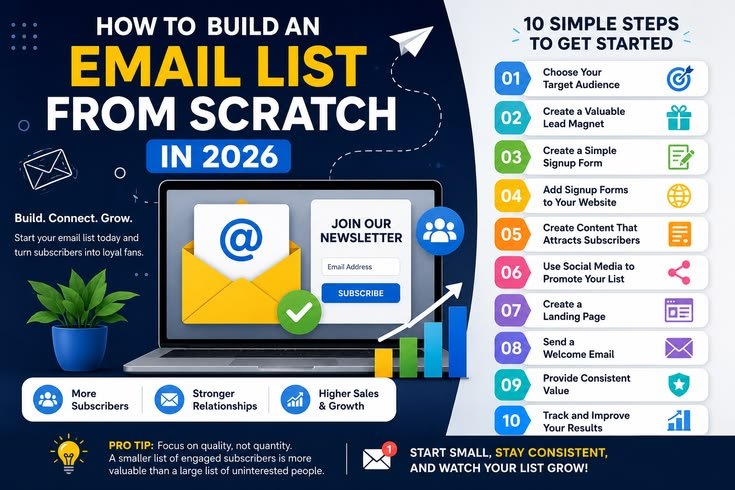
A typical email marketing process includes several stages.
1. Attracting Subscribers
The first step is attracting people who may be interested in the business.
Businesses can offer useful resources, newsletters, discounts, educational content, or other legitimate incentives in exchange for an email subscription.
2. Collecting Email Addresses
Businesses use signup forms or other appropriate methods to collect subscriber information.
The signup process should be clear about what people are subscribing to and how their information will be used.
3. Segmenting the Audience
Not every subscriber has the same interests.
Businesses can organize subscribers into groups based on factors such as interests, previous purchases, location, engagement, or stage in the customer journey.
4. Creating Email Content
The next step is creating useful and relevant messages.
An email might contain educational information, product recommendations, news, promotions, or a combination of these elements.
5. Sending Emails
Email marketing platforms can automate or schedule campaigns.
Businesses can send newsletters to larger groups or create automated messages triggered by specific actions.
6. Measuring Results
After sending an email, marketers can analyze performance.
Common metrics include:
- Delivery rate
- Open rate
- Click-through rate
- Conversion rate
- Unsubscribe rate
- Revenue generated
These metrics help businesses understand what is working.
Why Email Marketing Is Important
Email marketing offers several advantages.
One major benefit is direct communication. When people subscribe to a business’s email list, they have expressed an interest in receiving information.
Email can also support customer relationships over time.
For example, a business can welcome new subscribers, provide useful information, introduce products, and continue communicating after a purchase.
Email marketing can also complement other channels.
A social media post may attract someone to a website. The website can encourage the visitor to subscribe to an email list. The business can then continue providing useful information through email.
This creates a connected marketing system.
Types of Email Marketing
There are several common types of email campaigns.
Welcome Emails
A welcome email is usually sent after someone joins an email list.
It can introduce the brand, explain what subscribers can expect, and provide useful information.
Newsletters
Newsletters are regular emails containing articles, updates, tips, resources, or company news.
They can help businesses remain connected with their audience.
Promotional Emails
Promotional emails announce discounts, sales, special offers, product launches, or limited-time opportunities.
Promotions should be relevant and clearly communicated.
Educational Emails
Educational emails provide useful information that helps subscribers solve problems or understand a topic.
These emails can strengthen credibility and keep subscribers engaged.
Abandoned Cart Emails
Online stores can send reminders to customers who added products to their shopping carts but did not complete their purchases.
Follow-Up Emails
Follow-up emails can be sent after purchases, downloads, inquiries, events, or other interactions.
They help businesses maintain communication.
The Importance of a Strong Subject Line
The subject line is one of the first things a subscriber sees.
A good subject line should clearly communicate why the email is worth opening.
Avoid misleading or exaggerated subject lines.
Instead, use concise and relevant wording that matches the content inside the email.
For example, a subject such as “5 Simple Ways to Improve Your Online Marketing” communicates a clear benefit.
Personalization in Email Marketing
Personalization can make email communication more relevant.
Basic personalization might involve using a subscriber’s name, but more advanced personalization can consider interests, previous interactions, or purchasing behavior.
For example, an online store may recommend products related to previous purchases.
Relevant personalization can improve the customer experience because subscribers receive information that is more closely connected to their interests.
Email Automation
Automation is another important part of modern email marketing.
Instead of manually sending every message, businesses can create automated sequences.
For example, a welcome sequence could include:
- Welcome and introduction
- Helpful educational resource
- Explanation of the company’s services
- Customer success story
- Relevant offer
Automation can save time while maintaining regular communication.
Mobile-Friendly Email Design
Many people read emails on smartphones and tablets.
For this reason, emails should be designed to work well on smaller screens.
Important considerations include:
- Readable text
- Clear buttons
- Short paragraphs
- Simple layouts
- Properly sized images
- Easy navigation
A complicated desktop-focused design may be difficult to read on a mobile device.
Email Marketing and Trust
Trust is essential.
Subscribers should understand why they are receiving emails.
Businesses should avoid misleading claims, excessive messages, and unwanted communication.
Every marketing email should provide an appropriate way for recipients to unsubscribe.
Respecting subscribers can improve long-term relationships and protect the reputation of the business.
Measuring Email Marketing Performance
Email campaigns should be measured regularly.
Open Rate
Open rate indicates how many delivered emails were opened, although modern privacy features can make this metric imperfect.
Click-Through Rate
Click-through rate measures the proportion of recipients who clicked links within the email.
Conversion Rate
Conversion rate measures how many recipients completed a desired action, such as making a purchase or submitting a form.
Unsubscribe Rate
This indicates how many subscribers chose to leave the list.
Revenue
For commercial campaigns, revenue can be one of the most important measurements.
Businesses should focus on metrics that connect directly with their objectives.
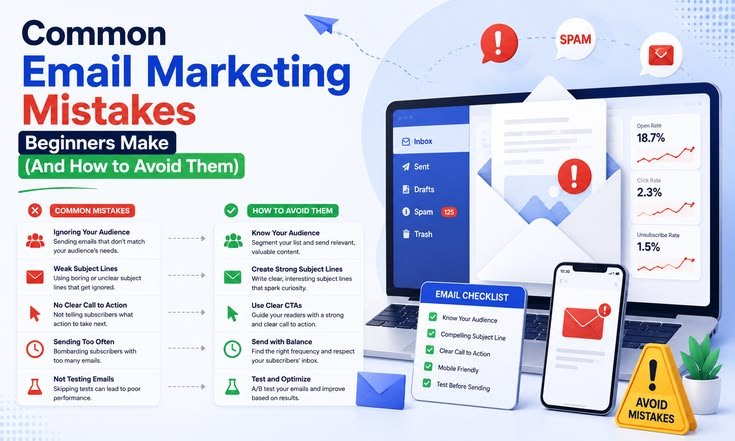
Common Email Marketing Challenges
Email marketing has several challenges.
Inbox competition is high. People receive many messages every day, so businesses need to provide meaningful reasons for subscribers to remain engaged.
Another challenge is maintaining list quality.
Some subscribers may become inactive over time. Regularly reviewing engagement can help businesses maintain a healthier list.
Content quality is another important factor. Repeatedly sending low-value promotional messages can lead to unsubscribes.
Best Practices for Email Marketing
Businesses can improve email marketing by following several principles.
First, obtain subscribers through transparent and legitimate methods.
Second, provide consistent value.
Third, use clear subject lines.
Fourth, keep emails easy to read.
Fifth, segment audiences where appropriate.
Sixth, personalize relevant messages.
Seventh, test different approaches.
Finally, measure results and improve future campaigns.
Conclusion
Email marketing is a powerful digital marketing method that allows businesses to communicate directly with interested subscribers.
From welcome emails and newsletters to promotional campaigns and automated sequences, email can support almost every stage of the customer journey.
Successful email marketing is not about sending the largest number of messages. It is about sending the right information to the right audience at the right time.
Businesses that build permission-based email lists, create useful content, personalize communication, use automation responsibly, and measure meaningful results can develop stronger relationships with subscribers.
When combined with other digital marketing channels such as content marketing, SEO, social media, and online advertising, email marketing can become an important part of a long-term business growth strategy.